Why an empty room looks smaller than the same room furnished
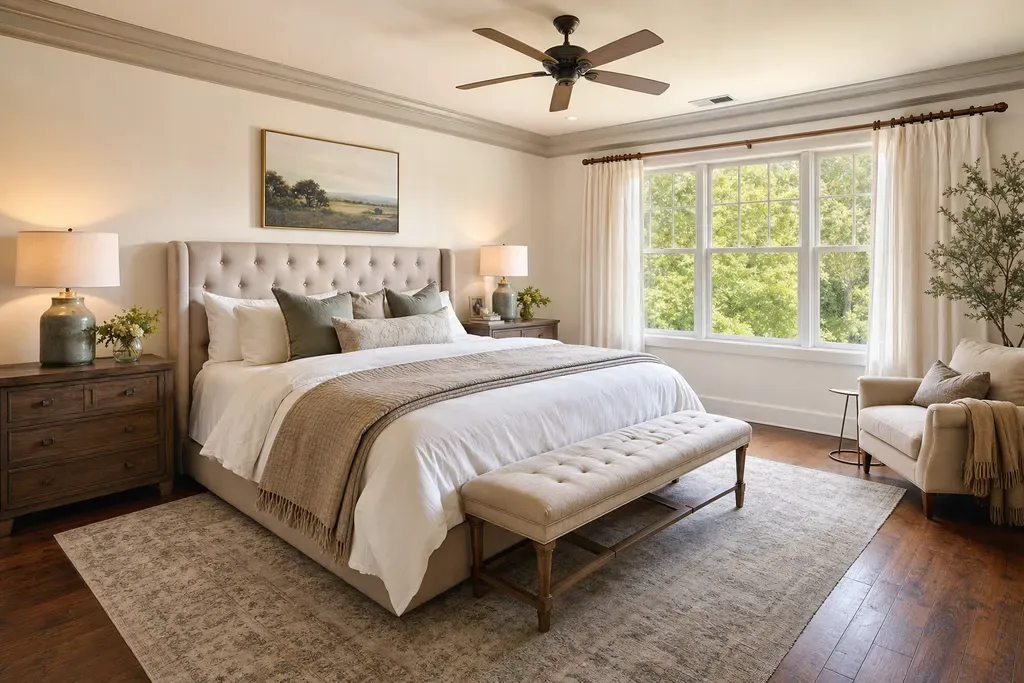
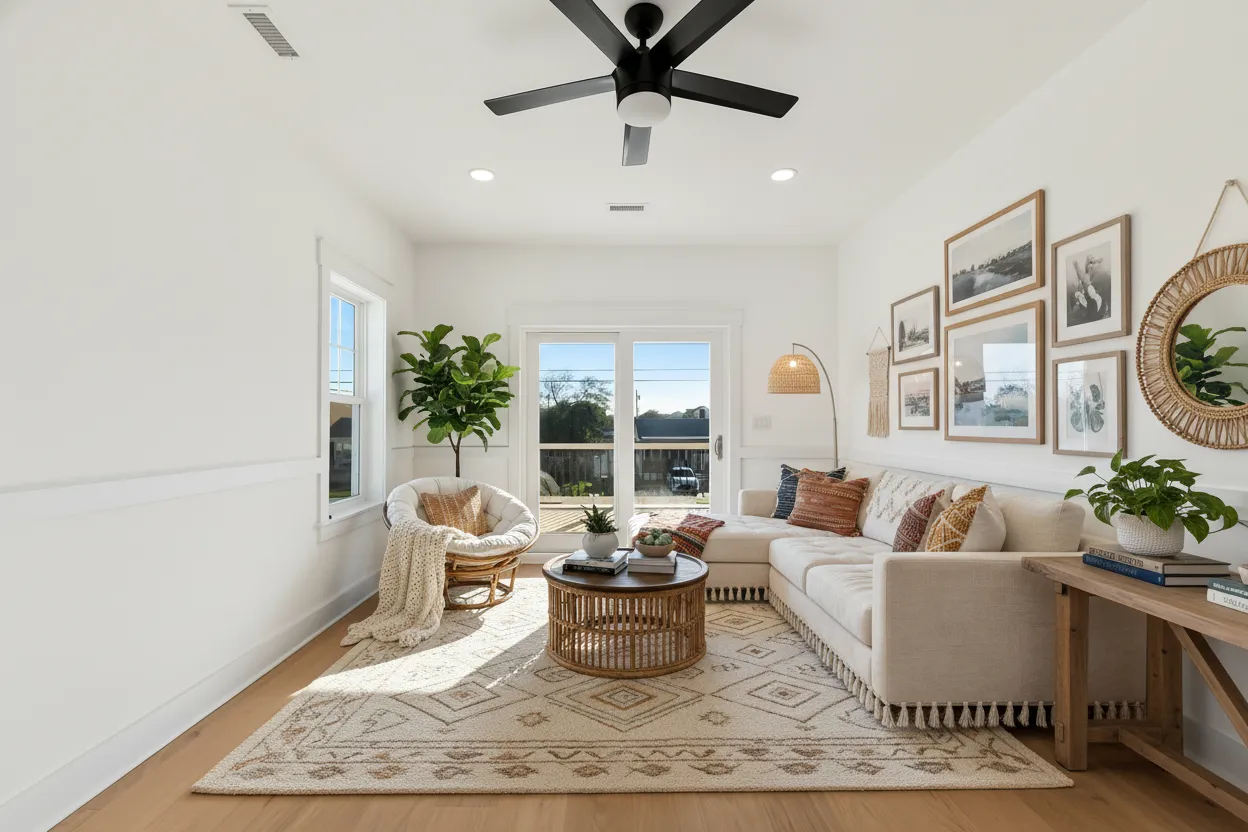
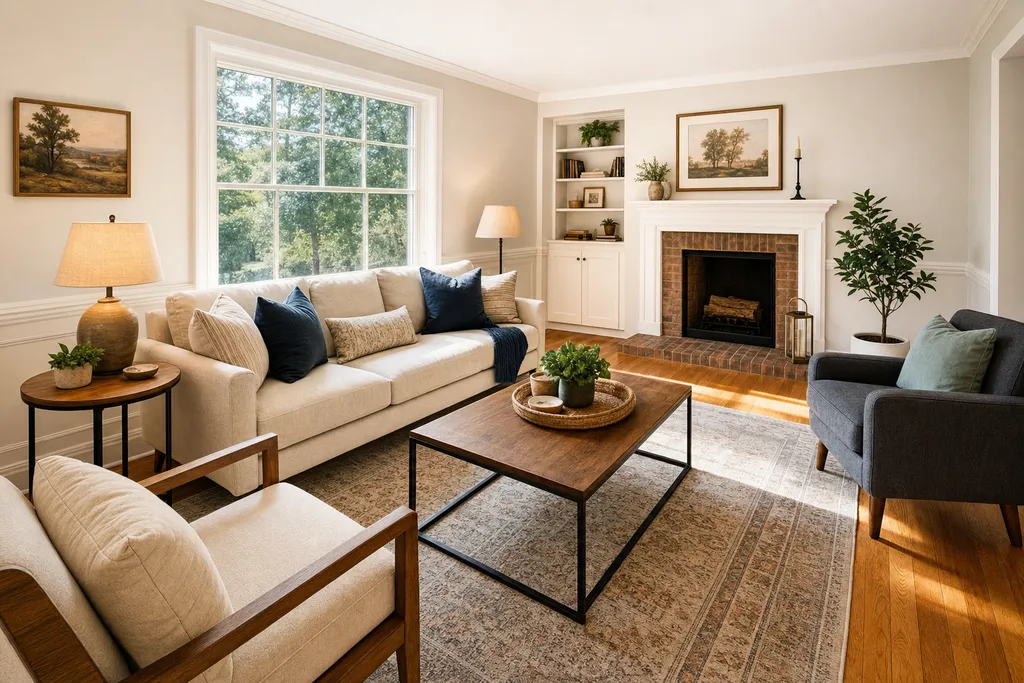
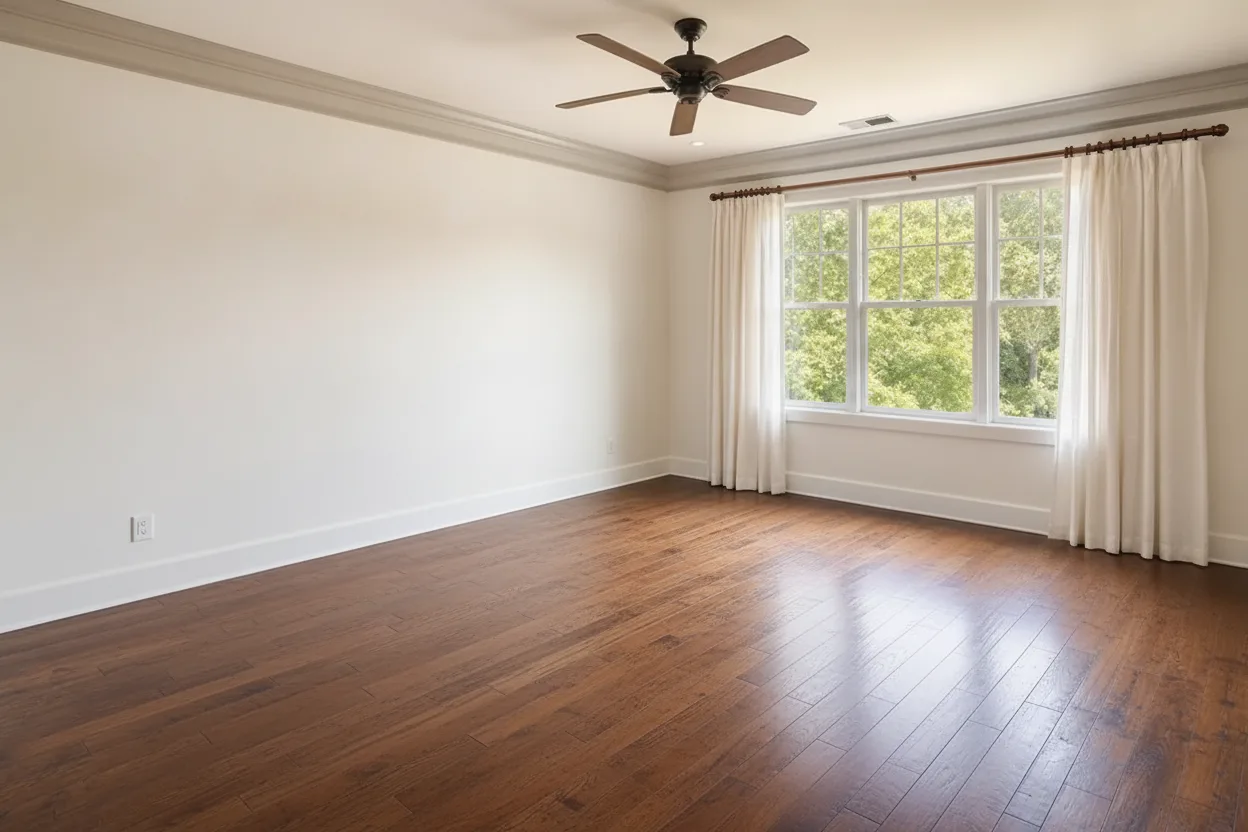
You'd think a room with nothing in it has to look bigger: more floor on show, more wall, more air. And yet, when you put the two photos side by side, the empty one and the furnished one, almost everyone points to the furnished one as the more spacious. It's not a decorator's illusion. It's how we perceive space.
The eye measures by comparison
No one perceives square meters directly. What we do is compare the space with objects whose size we already know: a sofa is more or less the size of a sofa, and everyone has a dining table's size in their head. If the room fits a three-seater sofa and a coffee table and there's still space to walk through, the brain concludes “it's big” without anyone giving it a number.
Take the furniture away and you take away the ruler. What's left is a rectangle of floor that could be twenty square meters or forty. And when in doubt, the buyer doesn't imagine the best: they imagine the worst, or simply move on to the next listing.
What an empty room tells the buyer
An empty photo sends three messages at once, and none of them helps. The first: “no one lives here”, which reads as “it's been on the market for a while”. The second: “you'll have to imagine everything”, which is work, and people swiping through listings on their phone aren't in the mood for work. The third, and the worst: “I don't know what fits in here”.
- A furnished living room answers “will my life fit here?” before the question is even asked.
- A bedroom with a bed and a nightstand tells you what size bed fits, which is all a parent wants to know.
- A dining room with a table for six says “you can have people over here”. Empty, it says “it's a room”.
Why style matters more than it seems
Furnishing isn't enough: you have to furnish for the buyer who's going to come. A three-bedroom house near a school sells to a family; a studio downtown, to someone young or to a rental investor. If the family home's living room is furnished as an industrial loft, the family can't see themselves in it. And what people can't see themselves in, they don't visit.
That's why in estaila you pick the style in one click, and there are sixteen: not to decorate, but to speak to a specific buyer. Modern when it's not clear who's buying; Family when it is; Luxury only when the price backs it up.
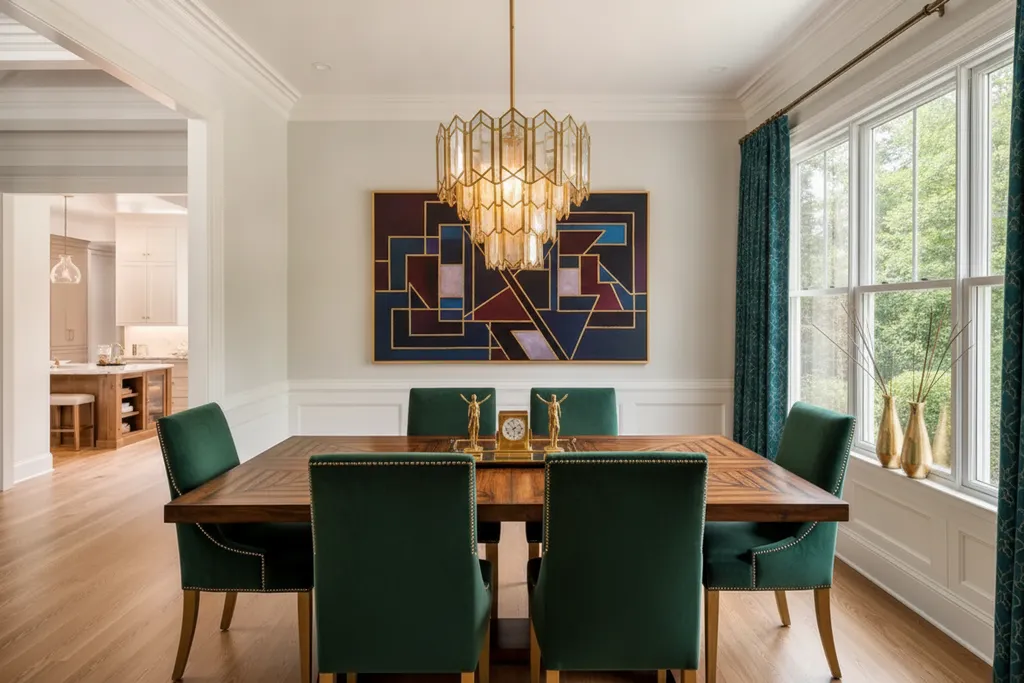
How to do it right in a minute
- Photograph the empty room in daylight, from the doorway, holding the phone horizontally. That's all it takes.
- Upload the photo to the Studio and choose the style with the buyer in mind, not your own taste.
- Check that the walls, windows and floor are unchanged. If anything structural changed, don't use it.
- Publish it as the first photo and note on the listing that it's virtually staged.
What not to do: over-furnish. A living room with five armchairs, three rugs and a bookcase doesn't look big, it looks full. Fewer pieces, well chosen, measure better.
Frequently asked questions
Isn't it better to show the empty room so the buyer can imagine whatever they like?
Hardly anyone imagines. Most people browsing listings on their phone decide in two or three seconds based on what they see. An empty room demands an effort most people don't make; a furnished one makes sense with no effort at all.
Which style makes a room look bigger?
Light styles with few pieces: Scandinavian, Minimalist and Modern. Low furniture, light colors and clear surfaces. Dense styles like Bohemian or Colonial add character but take away the feeling of space.
Does it work for bedrooms and kitchens too?
Yes. In a bedroom, the bed is the scale reference; in a kitchen, the table and chairs. In both cases the effect is the same as in the living room: the space makes sense once there's something familiar to compare it with.
Try it with your own photo.
Seven days free, no card needed. When they end you keep the free account; nothing gets deleted.
Start free